


Summary Of the Markets Today:

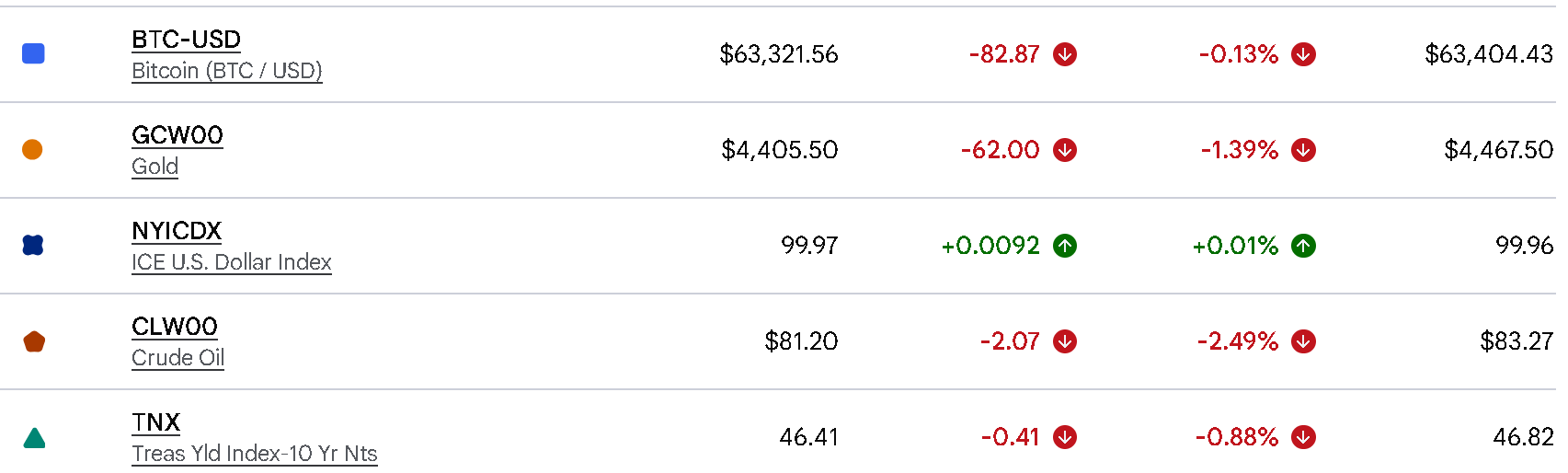
source: google finance
*Stock data, cryptocurrency, and commodity prices at the market closing

Today’s Highlights – Market Summary
I opened my trading platform this morning and saw U.S. stock indices move higher, with the S&P 500 setting a new intraday record. The three major indexes pulled back from their early highs as the session progressed, but all three finished higher. The Dow slipped below the unchanged line before slowly recovering and moving back into positive territory later in the session. The Nasdaq and S&P 500 remained in the green throughout the session, with the S&P 500 closing at a new record high.
As crude oil fell, this apparently provided cost relief, spurring gains in travel-related equities such as airlines and cruise operators. During the session, falling U.S. Treasury yields also seemed to offer an added boost to interest-rate-sensitive assets, such as real estate investment trusts (REITs) and dividend-paying stocks.
Midday buying momentum across all major market sectors was largely driven by news that wholesale inflation (PPI) cooled to an annual rate of 4.7%. (See Steven Hansen’s report below.) Following two consecutive days of moderating inflation reports, CME FedWatch reduced the odds of a September Federal Reserve interest rate hike to around 32% to 33%.
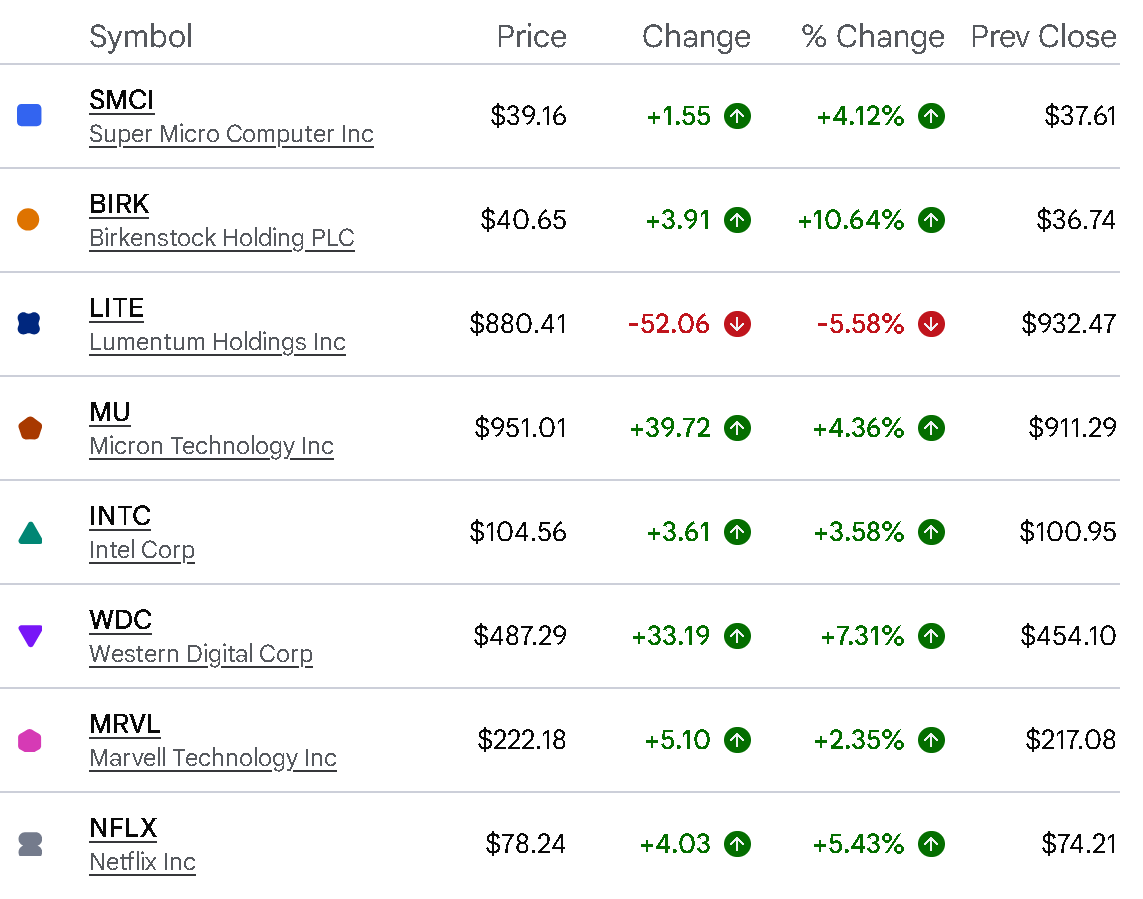
Major Market Movers Today

Read the August 2026 Economic Forecast: Economy Is Strengthening But So Is Inflation

Today’s Economic Analysis by Steven Hansen, Publisher:
The Producer Price Index for final demand in July 2026 increased 4.7% year-over-year (YoY) - down from 5.5% YoY last month. The PPI less food and energy was up 3.7% YoY - significantly down from the 4.7% YoY last month. Even though I am skeptical of the trend, the data clearly show inflation is moderating at the wholesale level. Part of this moderation historically migrates to the CPI. However, in the intermediate data - it shows a huge 8.0% YoY jump in food costs.

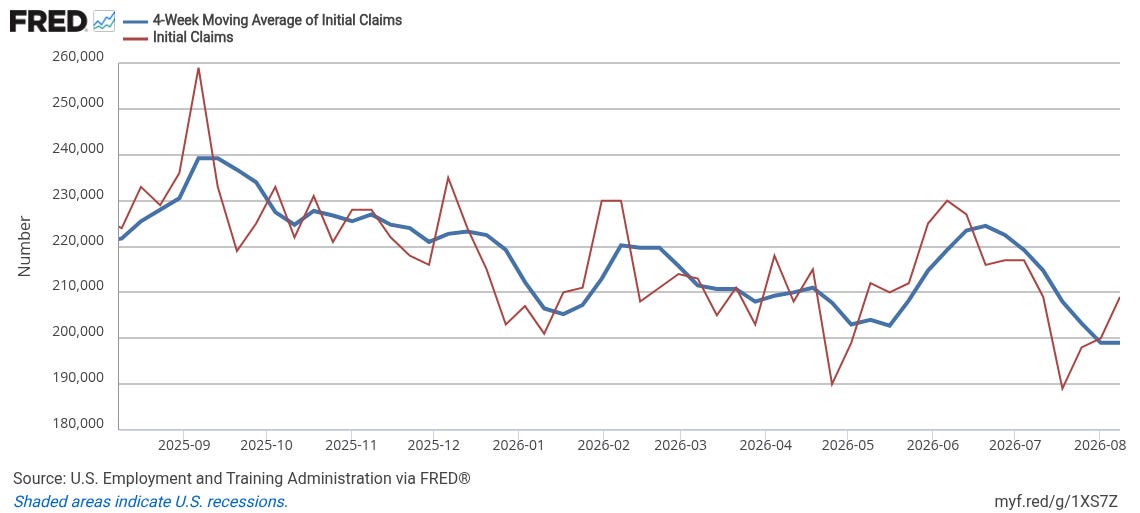
In the week ending August 8, the advance figure for seasonally adjusted initial unemployment claims 4-week moving average was 199,000, unchanged from the previous week's revised average. The previous week's average was revised up by 250 from 198,750 to 199,000. This data is consistent with an expanding economy.
Media Financial News and Opinion Summary:
Financial headlines today highlight fresh wholesale inflation numbers and shifting energy dynamics.
The Wall Street Journal (WSJ) and CNBC zeroed in on the July Producer Price Index, where headline wholesale prices flattened out and food costs fell nearly 1% month-over-month. On paper, that offers some relief after months of sticky inflation. However, non-food and service components are still running hot.
The WSJ reports Gulf oil producers are racing to build massive pipeline bypasses to circumvent the Strait of Hormuz.
Additionally, the WSJ reported a corporate security narrative involving North Korean IT workers using AI face-swaps to land remote U.S. tech jobs.
At ZeroHedge, their coverage highlights how removing volatile food items leaves intermediate goods inflation uncomfortably high. They are also closely tracking the escalating standoff in the Middle East, noting that Tehran’s recent military leadership shakeups suggest a prolonged bottleneck in energy transit routes rather than a quick diplomatic deal. On the commodity side, they are pointing to persistent structural demand in uranium and critical minerals as nuclear energy expansion picks up speed globally.
OilPrice reports that Brent fell over 1% toward $87 a barrel. The primary driver is a wave of gloomier demand forecasts from both OPEC and the IEA, which recently trimmed their global consumption growth projections.
Across Asian markets, The Economic Times is dominated by major corporate and domestic developments. High on their agenda is the sudden leadership vacancy at Tata Sons following N. Chandrasekaran’s exit, which sent shockwaves through Indian equities. Meanwhile, India’s consumer inflation ticked up to 4.45% in July.


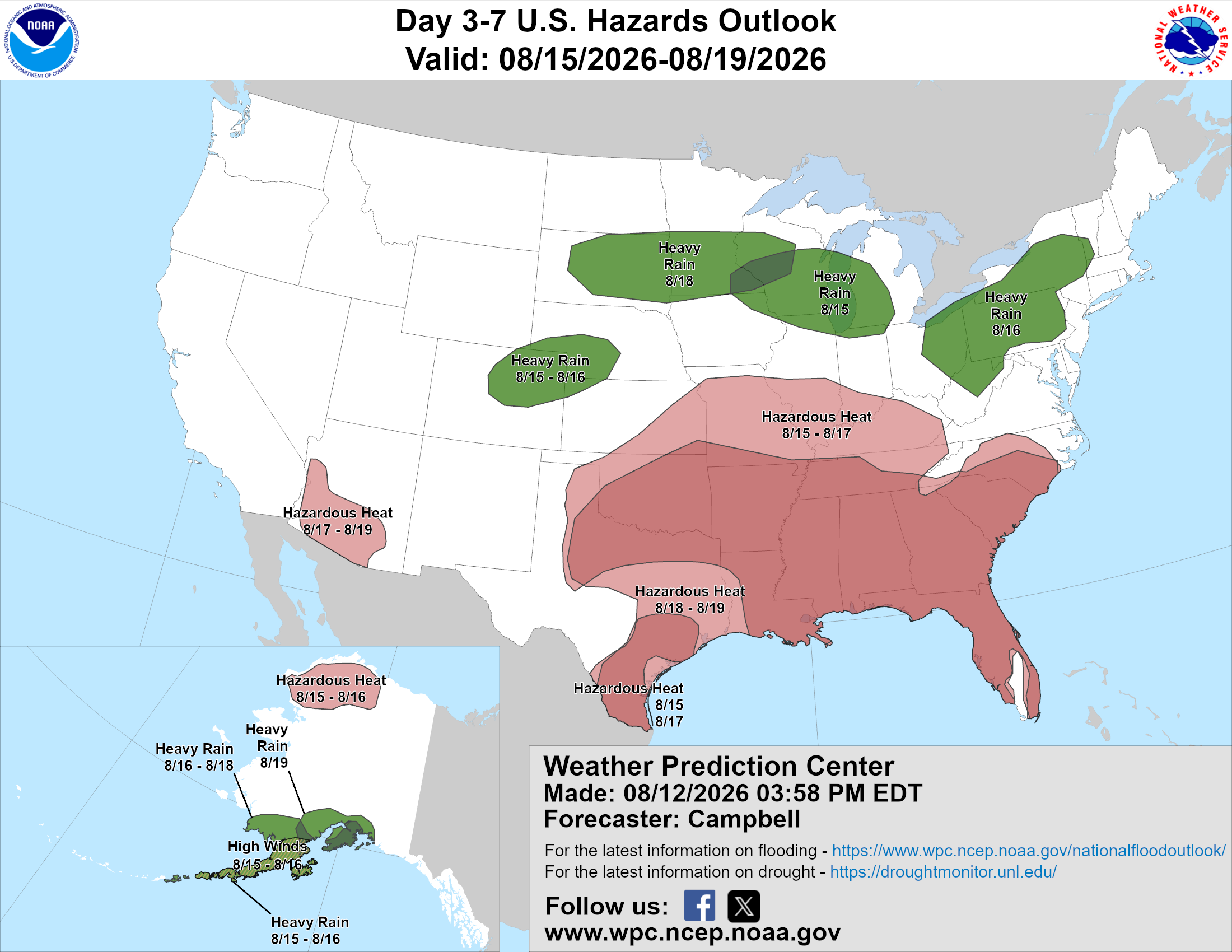
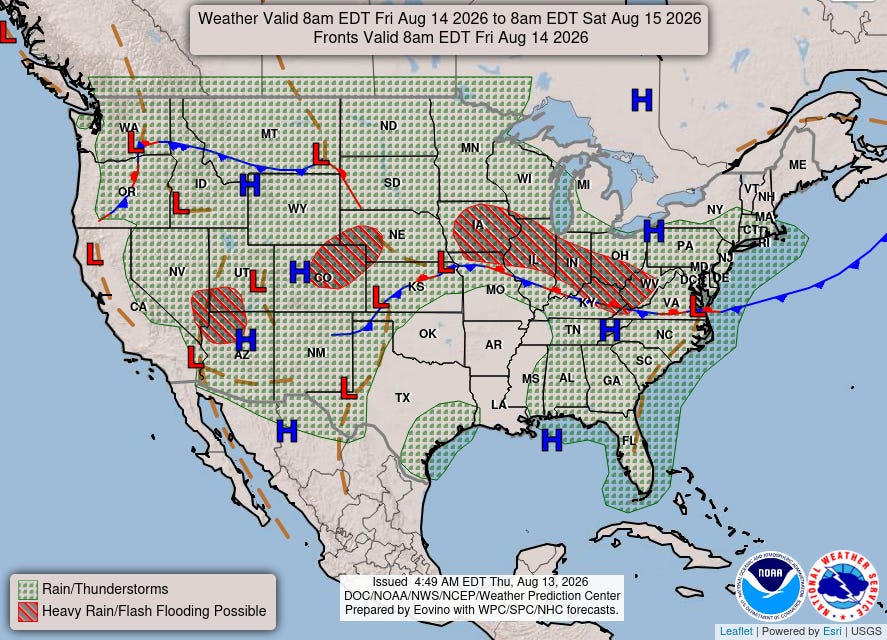
Weather Outlook for the United States and the World
This article highlights what we are monitoring over the next 48 to 72 hours. It also includes weather maps for longer-term U.S. forecasts (up to four weeks) and three- and six-day global weather outlooks, which can be very useful for travelers and understanding world news events. Additionally, we provide ongoing coverage of global tropical activities and special coverage of such events and other significant weather situations that affect or are likely to affect the United States.

Disclaimer
Nothing in this EconCurrents newsletter is financial, investment, legal, or any other type of professional advice. Anything provided in any newsletter is for informational purposes only and is not meant to be an endorsement of any type of activity or any particular market or product.